
There’s Beauty In the Fire We Carry
The fire that God places inside of us, that boldness, that passion, that conviction…it was never meant to push people away. It was meant to draw them in.
Fire brings warmth.
It gathers people close.
It offers light when everything around feels dark.
People are drawn to a good fire the same way hearts are drawn to the warmth and strength of someone who carries the fire of God well.
But here’s the thing, when we start using it to burn through whatever stands in our way or to scorch what doesn’t line up with our plans, we lose the beauty of what that flame was meant for.
The same fire that once brought warmth can turn wild and destructive when it’s fueled by pride, anger, or control.
I love a fiery woman. I love a little spark, a little edge. Because God made women like that on purpose.
Our fire was never meant to burn unchecked…it was meant to burn under His direction.
Not to consume, but to comfort.
Not to destroy, but to direct.
Not to scorch, but to shine.
A woman who learns to tend her fire with wisdom and grace becomes the kind of woman who lights the way for others to find their way to Him.
So maybe this week, ask yourself:
How will you use your fire?
Will it bring warmth?
Will it offer light?
Will it draw others closer to Him?
Fan into flame the gift of God, which is in you.
— 2 Timothy 1:6

You Have Access to Power
Have you ever started a day with a dead car battery? This happened to me the other day. I was getting ready to drop the girls off at school & go about my day. I got back into town late the night before. I felt like I hit the ground running… only to get in the car and realize it had NO power.
First thing I did? Picked up the phone and called my husband. Because obviously, I’m a delicate woman with fragile wrists, right? (lol) I could never jump my own car!
He said he’d be on his way, but then it hit me, if I waited on him, I’d be late for everything I had going on that morning. That’s when I remembered I had a jump box sitting in the back of my car. I’d had it for so long, but never used it. All I had to do was access the power that was already there.
So I popped the hood, hooked it up, and sure enough the car started right up. I called my husband to let him know we would be on our way. (Just your everyday mechanic, out here in a satin shirt and statement sneakers😉.)
Right then, God dropped something in my spirit: How many times do we do this? We run to someone else first — a friend, a pastor, our spouse — asking them to pray for us, to lay hands on us, to believe for us… when the power we need is right there.
Now don’t get me wrong — I’m all about community. I love community! From the very beginning, God designed us for it. There are definitely moments we’re called to link arms with others and intercede together. I’m honored when a friend shares a prayer point. But, sometimes, we’re so quick to reach out that we forget to reach in.
The same Spirit that raised Jesus from the dead lives in you. (Romans 8:11)
That means you already have access to resurrection power — not just on Sundays, but in your car, in your chaos, in your everyday moments.
So, before you call for help, pause and remember: YOU have access to the power that you need.


Confidence is Forged in the Quiet Places
Confidence is forged in the quiet places.
It’s not loud or showy, it’s a steadfast strength that comes from leaning fully on the Lord.
For a long time, I thought confidence meant being bold, put-together, and unshaken… but what that really was, was ego. It was built on my own abilities, striving, and held together by my fragile strength.
Now, confidence feels different. It feels quiet.
It’s forged in the still moments with God, in His presence, through His Word, and by learning to believe what He says about me over the lies that try to whisper otherwise.
Because the truth is, the enemy comes hard for confidence. His goal has always been to steal, kill, and destroy. And when I tell you he’s tried to come for mine, I mean it. He’s used lies like, “Who do you think you are?” or “You’re not qualified to do that.”
Sometimes, he’s even used the voices of people I love to echo those doubts.
But here’s the thing, like Tom Petty said, “I won’t back down.”
Confidence that’s rooted in Christ doesn’t crumble when it’s tested — the heat only brings more strength.
And I already know how this ends:
I walk in victory.Because my confidence isn’t in me anymore… it’s in Him.


The Battle Worth Fighting
This battle may feel heavy.
It may feel ongoing.
You may not even want to fight anymore.
But what if the victory you’re longing for isn’t just for you…
but for the generations that follow?
King David was known as a warrior.
His son Solomon was known as wise.
David fought battles his son never had to face.
He laid a pathway so Solomon could begin on a different playing field.
Legacy matters.
It may not make the fight easy,
but knowing that your battle could shift the future
might just make it worth it.
Do you believe some of your battles are generational? That your fight today could be the freedom your children inherit tomorrow?
Your creativity is a gift, use it!
Did you know you were literally created to be creative?
Not just the artsy types with paint-stained hands or design degrees… all of us. We’re made in the image of God, the ultimate Creator. Creativity is part of our spiritual DNA.
From the very beginning, God modeled it. Genesis 1 tells us how He formed, shaped, and spoke beauty into being. Then in Genesis 2, He gave Adam the job of naming every animal. This creative task was a project from God. Can you imagine that? Wandering through creation, seeing the first giraffe or platypus and saying, “Yep, that feels right.” There was no competition, no comparison, no second-guessing if he was “naming them properly.” Just pure, joyful creating alongside the Creator.
But somewhere along the way, we lost that ease. Now we live in a world buzzing with comparison, scrolling to see who is already doing “it” & wondering if our version of “creative” even counts.
Here’s the truth — it does!
Creativity isn’t about perfection. It’s about participation. You were made to bring something into the world that didn’t exist before (or maybe it does, but you need to do it with your unique touch).
Lately, I’ve felt like God has been giving me an extra dose of creativity & honestly, it’s been so fun!! I’ve had new ideas flowing, fresh perspective, and this reminder that creating with God is supposed to be joyful. Not pressured. Not performative. Just full of wonder. And I want that for you too.
So go be creative this week.
If you’re teaching — be creative.
If you’re leading — be creative.
If you’re crunching numbers — be creative (in your own excellent way).
Because when you create from the place God designed you to, joy follows.
So go ahead,color outside the lines! Bring life to the dull spaces. Add beauty where it’s been missing. I believe God is smiling down like a GOOD father, when He sees you adding your beautiful touch.


Stop Over-Explaining
We only get so much energy in a day. Yet, so often, we waste it trying to convince people to see things the way we do. We explain. Then, we over-explain. Then we find ourselves exhausted, frustrated, and hurt when they still don’t get it…or worse, when they don’t want to.
Even if what you’re saying is backed by Scripture, truth, facts, or science… some people simply don’t want to see things differently. Why? Because their narrative serves them. It makes sense to them-even if it doesn’t actually make sense. And no amount of talking in circles will change that.
Look at Jesus.
When He walked this earth, He was the perfect example of what it means to be human. He spoke truth-absolute truth- without chasing people down to convince them.
Think about the story of the rich young ruler. The man asked Jesus, “What must I do to inherit eternal life?” Jesus told him plainly: sell your possessions and follow Me. The man walked away sad, unwilling to hear what he didn’t want to hear. What’s striking is what Jesus didn’t do. He didn’t run after him. He didn’t plead, reason, or remind him of how life-changing obedience would be. He let him walk away.
Or consider Judas at the Last Supper. Jesus tells the disciples one of them will betray Him. Judas says, “Surely not I, Lord?” And Jesus simply responds, “Yes, it is you.” He doesn’t roll out a scroll of proof. He doesn’t argue His case or beg Judas to reconsider. He doesn’t remind Judas of what a good friend he has been to him. He lets Judas be Judas.
That’s wisdom. That’s power. That’s a boundary.
And I think that’s a lesson for us.
We don’t need to spend our precious energy trying to make people see what they don’t want to see. We don’t need to run ourselves ragged trying to force someone into truth. Sometimes the most Christlike thing we can do is simply state the truth, and then let people choose.
If this resonates with you, maybe it’s time to look at where in your life you’re spinning your wheels. Where are you over-explaining? Where are you trying to control someone else’s understanding at the expense of your peace?
You have permission to stop.
You have permission to set a kind, firm boundary.
You have permission to let people be who they are, and still protect your heart in the process.
Because your energy is too valuable to waste.

The Beauty of Becoming: It’s Been in You All Along
The transformation of a caterpillar into a butterfly is one of those natural miracles we all kinda know about. Recently, I took a closer look at what actually happens inside the chrysalis (the transformation stage between caterpillar and butterfly) & it’s a beautiful representation of our transformation in Christ.
When a caterpillar enters its chrysalis, it doesn’t just grow wings and come out prettier. It completely breaks down.
Once it’s sealed inside, the caterpillar releases enzymes that digest almost all of its body. It turns into a soupy, unrecognizable goo. Ewwwww! Organs, tissue, muscles…gone. What’s left is liquid and within that liquid are hidden structures called imaginal discs. These tiny clusters of cells have been inside the caterpillar all along, quietly waiting. And now, in the middle of the mess, they begin to build a new creature: a butterfly.
And here’s the part that got me: That whole process is a picture of our own transformation in Christ.
Sometimes, the journey of dying to ourselves feels like everything is breaking down. The old ways, the false identities, the habits and wounds…we let them go, and it can feel like we’re unraveling. Like we’re in the middle of our own chrysalis season.
But here’s the hope: we already have what we need inside of us.
God has placed the Holy Spirit within us, and His Word is our blueprint. Just like the imaginal discs in the caterpillar, His presence is already there, ready to rebuild us into who God planned us to be “beforehand.”
We’re not being destroyed, we’re being remade.
So if you feel like a puddle of goo (LOL), maybe you’re in the exact space that you need to be for true transformation to happen. Maybe this is the necessary process of becoming. And you can be certain there will be beauty on the other side.
For we are His workmanship, created in Christ Jesus for good works, which God prepared beforehand, that we should walk in them. — Ephesians 2:10
Even in the messy middle, God is working. You were created on purpose & for a purpose, that’s already been established.

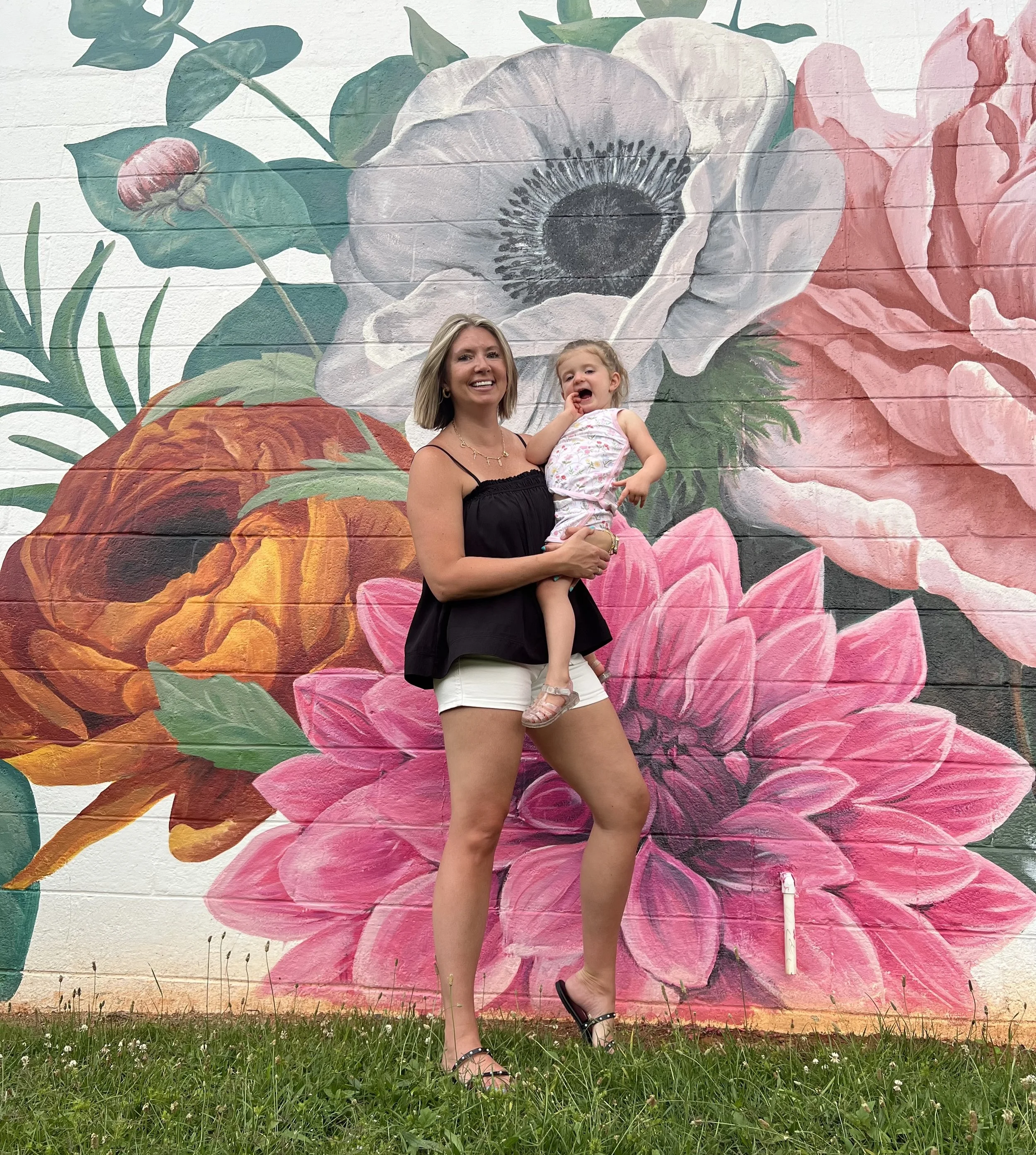
The Death of Me (and the Birth of Something New)
The other day, I was in a conversation with a friend—just a normal, everyday chat about life and motherhood—when I looked at her and said, “This two-year-old is going to be the death of me.”
I laughed when I said it, but the truth of those words hit deeper than I expected.
Because in many ways… it’s true.
Mothering my second daughter has been so different from the way I mothered my first. (My first daughter is largely the reason for my foundation of faith in the Lord.) Being a mama to this wild, brilliant, strong-willed little human—who mirrors so much of my own personality—has been one of the most refining seasons of that faith. She reflects back to me my stubborn will, my decisiveness, and my drive. She tests my patience, exposes my limits, and calls out parts of me I didn’t even know needed dying.
And that’s exactly what’s happening.
She’s not the death of me in the flippant, dramatic way we often mean when we’re tired and overwhelmed. She’s the death of my flesh—the part of me that craves control, convenience, applause, and ease. The part of me that wants to be understood before I seek to understand, and to be right more than I want to be loving.
Dying to the flesh is not pretty. It’s not tidy. It doesn’t fit into highlight reels or polished captions.
But it’s holy.
And it’s only possible when we invite God into the process—the tantrums, the tired eyes, the moments of guilt and grace, the deep-breath prayers whispered in the hallway. It’s in the surrender that something new begins to grow: a deeper compassion, a quieter strength, a more anchored faith.
So yes, this two-year-old may be the death of me—but only in the best way.
Because as the old me fades—the impatient, performance-driven, “have-it-all-together” me—something far more beautiful is being born.
And I pray she sees it too.
Not just a mom who’s tired, but a mom being transformed.
Not just someone who disciplines, but someone who’s being discipled.
Not just someone who gives her life for her children—but someone who’s being made more alive, day by day, by the One who gave His life for us all.


Prepared for the Promise
God’s provision is never the issue—timing and capacity often are.
In Luke 5, we find Simon Peter tired and discouraged, having toiled all night with nothing to show for it. But at Jesus’ word, he obeys, and the result is abundance—so much that the nets begin to tear. The provision was miraculous, but the infrastructure wasn’t ready to hold it.
Fast forward to John 21. Peter, now shaped by years of walking with Jesus—through miracles, failures, denial, and restoration—receives a similar instruction from the risen Christ. Again, an overwhelming catch of fish. But this time, “even with so many, the net was not torn.”
What changed? The timing and maturity of Peter. The same Peter who once fell at Jesus’ knees in fear now throws himself into the water in joy. The miracle is no less, but now the capacity to carry it has been formed.
God is not just preparing what He has for you—He’s preparing you for what He has.
Sometimes we’re frustrated when doors don’t open or prayers seem unanswered. But if we were to receive an immeasurably more before we had the strength to sustain it, it might crush us. God’s timing isn’t a delay—it’s protection.
So today, if you’re waiting, trust that God is strengthening your “nets”. He’s fortifying your character, deepening your faith, and increasing your capacity so that when the fullness of His provision comes, it won’t tear you apart—it’ll be the blessing that God intended.
Reflection Question:
Am I trusting God’s timing, or striving to carry more than I’ve been prepared for?
Prayer:
Lord, thank You that You know not only what I need, but when I’m ready to carry it. Strengthen my heart and character while I wait.

Serving Is My Happy Place
Let that be our prayer today. That as we pour out, we do so with joy. That as we love others, we reflect Jesus. And that in every act of service, big or small, we are reminded that it is a gift to be used by God—exactly as He made us.
So go on.
Serve freely.
Love deeply.
And shine brightly—in the unique, beautiful way that only you can.
There’s a holy kind of excitement that stirs in your soul when you realize that God didn’t just create you to exist—He created you to serve. And not in just any way, but in a way that uniquely reflects how He wired you. The skills, passions, quirks, creativity, and even the tender places in your story—they’re all part of a bigger purpose: to bless His people.
What a gift that is.
To serve God’s greatest commodity—His people—is an honor that reshapes how we view our lives. When we serve others, we’re not just filling a need. We’re reflecting the heart of Jesus. We’re walking in humility, just as Philippians 2:3–4 reminds us. And when we lean into our God-given design, that service overflows with joy, energy, and purpose.
You weren’t meant to serve like someone else.
You were meant to serve like you.
“I love helping others. Lord, continue to fashion a servant’s heart within me.”
Let that be our prayer today. That as we pour out, we do so with joy. That as we love others, we reflect Jesus. And that in every act of service, big or small, we are reminded that it is a gift to be used by God—exactly as He made us.
So go on.
Serve freely.
Love deeply.
And shine brightly—in the unique, beautiful way that only you can.
Do nothing out of selfish ambition or vain conceit. Rather, in humility value others above yourselves, not looking to your own interests but each of you to the interests of the others.
Philippians 2:3–4 (NIV)


Does it matter if i read my bible?
By Drew Hunt
“Above all else, guard your heart, for everything you do flows from it.” Proverbs 4:23
Ever been told to read your Bible more, then think to yourself, “cool, but why? And how?”
There are so many things competing for our attention these days. And a lot of the options can leave us still feeling empty. Or turn on any media outlet and you’ll quickly see that often times, fear is the hook being used to pull us in.
Just like our physical bodies, our minds and spirits need feeding every day. And just like a parent who knows their kiddos will grow healthy when they’re fed healthy food, our God wants to do the same-feed us spiritually and emotionally.
He has so much empathy for our weary wear and tear of daily life, which is why He’s eagerly waiting to help fill us daily with His life-giving messages of truth that nourishes our souls.
But here’s the deal, it’s on us to make the time. The writer of Proverbs gives such a great reminder in chapter 4 when it reminds us we have to guard our hearts This doesn’t mean put a wall around hearts like a fortress so nothing can get in or out. But instead, it’s an important reminder to closely monitor who and what we’re passing the mic to in our lives because what we allow in is what will flow out. And filling our hearts with God’s Word will never put us to shame.
Because we serve a God who adores us, we get to participate in the joy of relationship, not the rigors of a religion. And so we can read God’s Word out of delight, not duty, because it helps us discover new dimensions of His character and His heart for us.
Our God is ALIVE and so is His Word. It isn’t just some dusty, ancient, out of touch history book.
It’s a powerful tool God still uses to this day to communicate with His kids. And digging into it daily means we’re not only getting to know our Heavenly Father in new ways, but it’s going to create actual transformation by taking hold in our hearts, refreshing and reshaping how we do life.
When we offer up our minds and hearts to be filled by God’s Word each day, we’ll quickly find less space for distractions like fear and doubt to take hold.
Instead, hope is illuminated through the power of learning to hear our Father’s voice and the peace we so long for becomes our foundation.
So how can you get started? Below are a few of our favorite tips and tricks for not only getting into God’s Word but actually retaining what you read. Let’s gooo!
4 Tips for Reading the Bible:
-Ask the Holy Spirit to give you wisdom as you read ( see Drew’s Bible reading prayer below)
-Look for God on every page; instead of just reading this and only asking “what does this mean for me?”, try first asking “God, what do You want me to know about You here?”
-Find a Bible reading resource (linked below)
-Get in community (see below)
Bible Reading Prayer: (courtesy of The Bible Recap)
Father, thank You for Your Word; as I read it
God, give me wisdom, knowledge, and understanding.
Let any knowledge I gain help me love You and others more, and not puff me up.
Help me see something new about You that I’ve never seen before.
Correct any lies I believe about You or anything I misunderstand.
Direct my steps according to Your Word. Amen.
Reading Resources: maybe you love staying on a plan or stories really help a point stick in your memory. You’re in luck-there are so many great devotionals out there that offer a helpful jumping off point for digging into God’s Word. Devotionals will typically start with a verse, include a short message followed by a prayer and are meant to be done in a few minutes. Whereas a Bible study will include a deeper dive into a particular book or chapters of the Bible.
Here are just a few of our favorites resources to get you going:
Proverbs 31 Encouragement for Today email devotions
Upon Waking by Jackie Hill Perry
Live in Grace, Walk in Love by Bob Goff
You Version Bible App: quick note on this one, there are an endless library of devotionals on every topic as well as the entire Bible itself in several translations; there is even an audio option so you can LISTEN to the Bible while out for a run, sitting in the school pick up line or making Easy Mac. Praise the Lord for technology, right?
Community: like with any new habit, consistency can be tough if we’re trying to wing it on our own. We’re wired for community, so having people to cheer you on and keep you moving forward can be a game changer. Of course there is nothing better than face to face interaction that comes from plugging into a local church and/or small group. But online community can be powerful as well and many of the apps mentioned above like The Bible Recap, You Version and Proverbs 31’s First 5 have community groups built in. Win win!

What’s in the Corners of Your Heart?
By Crystal Warr

The other day while cleaning, I went up to my oldest daughter’s room. To my surprise, the space looked perfect on the surface—not a thing out of place and with her prized possessions proudly displayed.
But as I moved through the room, I noticed a pile of random items shoved into a corner behind a tall mirror. Leftover holiday trinkets, old toys and nick knacks triggered my frustration. Why would she go through the effort of making her room look so perfect while hiding all this mess?
Then, the Holy Spirit gently nudged me: What do you have shoved into the corners of your heart?
That question hit hard.
I realized I’ve been guilty of the same thing. How often do we focus on making our hearts look nice on the surface, hoping that God (and others) will only see what we’ve polished and arranged so carefully? We shove away the uglier things—the messes from past hurts, the things that should have been let go long ago—as if hiding them will make them disappear.
But God isn’t content with just the tidy, polished parts. If our heart is truly His home, He wants to be present in every corner, not just the parts that look “good.” He doesn’t want an aesthetically pleasing entryway with a mess hidden in the scenes. He wants to inhabit each room of our hearts, and He wants to help us sort through the junk, showing us what can be redeemed, what needs to go, and what He can transform into something beautiful.
Honestly, my first reaction to my daughter’s hidden mess wasn’t gentle. I thought about marching down to her school, bringing her home, and showing her the mess she’d tucked away. But, in that moment, I felt the Holy Spirit’s guidance—helping me parent with grace instead of frustration. God’s heart toward us is much the same: He sees our hidden messes, the things we’d rather not acknowledge, but He doesn’t storm in to shame us. He gently calls us to let Him in, to trust Him with every part of our hearts.
Imagine your heart as a house with different rooms. The living room may be clean and inviting, where you put on your best for God and others. But what about the attic, full of old hurts and hidden regrets? Or the basement, where you keep secrets buried away? God isn’t interested in dwelling only in the “nice” rooms. He wants to move through every space, filling it with His love and light. He wants to clean out the corners, not to make us feel ashamed, but to bring freedom and healing.
What if we invited God to every part of our hearts—not just the “public” spaces but the hidden corners too? What if we trusted Him with the brokenness we’ve shoved aside, the parts of our story we’re still wrestling with & stuff that should be thrown away? When we let God fully into our hearts, we experience a love that isn’t put off by our mess but instead transforms it into something new and beautiful.
Today, let’s ask ourselves: What have I hidden in the corners of my heart? Let’s invite God into every room, every corner, trusting that He wants to be fully at home in us, mess and all. His love is patient, His grace is kind, and He’ll never turn away from the work of transforming us from the inside out.
Prayer:
Dear Lord, Thank you, that you are a loving, kind and good Father. Because of your character, I can trust you with anything. I invite you into all of the spaces that I tend to tuck away-even the ones that I try and forget about myself. Your word says that, perfect love drives out fear.” (1 John 4:18)
I invite YOUR love to help reveal and heal anything that I have tried to stuff away or heal in my own mite. Thank you for your goodness and kindness towards me.
In Jesus Name, Amen.

Year End Assessment

By Drew Hunt
What do you think of when you hear the words “New Year’s Resolution”?
For me, it sets off a flood of FOMO over what didn’t get done.
And if I’m not careful it can actually become a cloud that hangs over the joy of this season.
We live in a culture of microwave expectations but life is a crockpot reality. We want everything to happen right now, which is why the “new year, new me” resolutions don’t usually last.
So what if we try a different way this year that aims toward an unmanufactured pace of grace? We implement measurable goals because goals are the framework for how we give intention to our days. But done in a healthy, life giving way.
So as we wrap up the year, I want to challenge you to start this project on paper somewhere, maybe in your journal between now and the new year.
This is an exercise borrowed from Pastor Chris Hodges, We’ve adapted it slightly but the credit goes to him…
The point of this project is NOT to beat ourselves up or judge ourselves for not doing enough or better. It’s to highlight what’s working and apply more of that into the next chapter of our life.
Think about the most important areas of your life; personally I break these down into about 10 buckets; and what you can do is first LOVINGLY think about how you would grade yourself in each of these areas from the last year.
Ready, set, go…
Relationship with God: spent time with Him?
Relationships with other humans: partner, family, friends, etc; how much time have I intentionally spent with other and been present there?
Job: whether you’re in an office, own a business, manage a home,you’re a student-> am I spending a healthy amount of time there and do i have a good attitude while I'm there? How do I treat those around me?
Digital life: social media scrolling, netflixing; how has that served me? This is more about who we’re following and shows we're taking in…Has it added to my life and made me kinder, more loving or taken away, leaving me feeling frustrated, less than, dark?
Finances: how am I stewarding my money? How generous am I? Am I stuck in a loop of buying stuff I don't need? Do I think before I spend? Am I saving/investing/sharing?
Ministry: am I using my gifts to love others and love God?
Attitude: how do I treat others? Do I try to lead more with enthusiasm and joy?
Emotional life: what’s my thinking like? How’s my mindset? What have I been surrounding my mind with?
Creativity: dreams, plans, visions; have I been paying any attention to those?
Physical life: how am I treating my body? Eating? Exercising?
Now that you have your buckets and the good stuff you’ve seen and brought to life this year, we want to think about how we can make some of these things better.
To do that, here's the last part of this exercise: I want you to ask yourself these 5 questions:
What’s my life’s purpose? In other words, what was I put here to do? What vision do I have for my life and ask God what vision HE has for it and see if they match up? I LOVE the verse from Colossians that says “everything got started in God and finds its purpose in God”; basically, you have to go to the manufacturer if you want to find out how the thing is made
Is the way I’m doing life helping me accomplish number 1?
How do I measure that? So I’d recommend keeping these bucket items somewhere that you can check them often; posted on a message board in your house, in your journal and set a reminder once a quarter to take a look throughout the year just to do a check in and say “how’s it going?”
What are my values? What matters to me most? Write those things down. For me, it’s God, people, operating with excellence and living with joy; so is the culture of our life lining up with that stuff?
What needs attention right now? Meaning if I can make an improvement here, everything else in my life right now improves too.
Again it’s a lifestyle of purpose which means it stretches way beyond a 365 day calendar year.
We’re called to live mission minded, from a place of victory.
Because our time here is about more than just us. Who we’re becoming today will shape the generations coming behind us and echo into eternity.
So no matter what this year looked like for you; maybe it was a great year, maybe it was one of the hardest.Either way, we’re moving forward in HOPE because we know we’re here for more than to just eat, sleep, survive!
We were created for this specific point in time by a God who wants to move us FORWARD. To give us hope and plans for a future, to help us flourish, to give us courage, He’s made us more than conquerors of the things that hold us back by gifting us with His PRESENCE through the power of His Spirit to lead, guide and encourage us.
And He’s invited us to partner with Him on making an impact in this world.
I hope this holiday and new year season is your best yet.
Remember to stop and pause, be present, remember you’re doing great and ask God to help sync your heart with His.
It will all get done. Remember why we celebrate this season in the first place.
Wishing you so much love, joy, peace and FUN!

Meet Me in the Mundane
By Drew Hunt

“Remain in me, as I also remain in you…I am the vine; you are the branches. If you remain in Me and I in you, you will bear much fruit; apart from Me you can do nothing.” -John 15:4-5 NIV
I heard the splat followed by a sizzle.
Then steamy plumes hovering over the boiling pot as a reminder, my burning dinner was one more thing needing attention.
With our three toddlers and preschooler’s harmonizing wails, toy pieces scattering, timers dinging, dishes piling in the sink and my husband traveling for work, I was outnumbered and wishing I could grow a set of GoGo Gadget arms.
In frustration I called out from the kitchen sink, “Lord, I’m drowning here, can you throw me a lifeline?”
Ever been there?
Right about that moment while scurrying to fix plates for the hungry small people tracing laps around me, I accidentally bumped my phone to see the screen pop open with a verse out of my morning devotion reading.
From John 15 it read: “Remain in Me, as I also remain in you. No branch can bear fruit by itself…”
Remain in Me.
Now, I've glossed over this verse 1,000 times, even while making paper grape vine replicas in Vacation Bible School.
But in the sweet way only God can, clangs of chaos hushed just enough for me to hear Jesus spring up through those words with a fresh perspective as if to say, “You are mine; I know what you’re up against and that’s why I’ve made Myself constantly available to you.”
What I’d always seen as a message of intimidation was suddenly a loving invitation for a relationship with us built on trust.
So His Word wasn’t to condemn my shortcomings, but encourage freedom from the pressure of them.
Jesus was showing me vines and branches aren’t just intertwined when it’s convenient or connect when life’s going well. The vine is the dedicated lifeline to branches, with roots running deep, offering security and drawing up nutrients for the branches to flourish and bear fruit.
Because we live in a culture that often celebrates a fierce reliance on self, seasons of survival mode can leave us believing the lie that we’re on our own.
But as we’re reminded in this passage, that is not God’s plan for His kids.
So how can we stay connected with our Lifeline?
Reading: reading His Word in quiet time trains our heart to hear God’s voice through even life’s loudest moments.
Worshiping: beyond Sunday morning and having gratitude in our challenges builds character and opportunities to experience God’s goodness. It’s how we glorify and thank God for His love and mercy but it’s also a weapon to demolish the enemy and secures our minds.
Speaking: make Jesus our first response not our last resort by talking with and praising Him through our day, even when it’s tough. No need to wait until we’re feeling happy or have our act together. Simply speaking His name sweeps away darkness. He’s always faithful and present in times of trouble.
Reading that verse didn’t magically drop a super nanny on my doorstep.
Something better happened-truth was whispered that reinvigorated my soul by connecting me with the Vine Himself, because God’s Word is alive, friend! Reading and speaking it activates Heaven.
We have a Lifeline that is committed to our flourishing.
And when we choose to receive Him, no matter the circumstances, an abundance of fruit is ours to bear.
Dear Lord, thank You for being our constant Lifeline of grace. Help us remember that while we may not be able to change current circumstances, when we stay connected and bring our worries to You, we will always find the rest and peace our souls crave.
In Jesus’ Name, Amen.

How Grieving Our Losses Leads to Victory in God
In today’s culture, vulnerability and learning to grieve are often seen as a weakness, but what if we understood they’re actually superpowers?
Learning to grieve the “little losses” is one of the ways we tap into that strength, igniting a spark that could lead to life-changing healing.
By Crystal Warr

In today’s culture, vulnerability is often seen as a weakness-but what if we understood it’s actually a superpower?
Lately I’ve been feeling the nudge to shine a light on a topic that’s often avoided but is so crucial to living a life of fullness—and that’s grief…
Don’t worry, this isn’t going to be heavy. Instead, consider it an opportunity to strengthen your vulnerability muscle.
In today’s culture, vulnerability is often seen as a weakness, but as Dr. Brené Brown teaches, it’s actually a superpower. Learning to grieve the “little losses” is one of the ways we tap into that strength. This term, introduced by Carey Nieuwhof, refers to life’s disappointments and letdowns that we tend to sweep under the rug. But when we ignore these emotions, we end up in cycles of repeated pain.
I want to share a powerful story from the Old Testament, featuring David, who fought many battles in his life, and in 1 Samuel 30, we find him in one of his most difficult moments. David and his men returned to Ziklag, only to find their homes burned, their families taken, and all their belongings stolen. These tough, battle-hardened men wept until they couldn’t weep anymore. How often do we allow ourselves to grieve like that?
Many times, we think grieving makes us weak, but there is strength in it. God meets us right in the middle of that pain. David’s first step after grieving was to go to God and ask for direction. He asked, “Should I chase after this band of raiders? Will I catch them?” And God’s response was clear—yes, go after them and you will recover everything.
Here’s a critical point for us: how often do we ask God which battles are worth fighting? Many times, we fight battles that God never intended us to. But David, by seeking God’s guidance, received a promise of victory.
Ask yourself: what disappointments have I experienced that feel unfair? How is the weight of that wearing on me? It’s important to be real about these feelings, both with yourself and with God. He wants to meet you in every emotion, but He can only do that if you invite Him in.
As David and his men went after the Amalekites, they came across someone from the enemy’s camp. Instead of continuing on, they stopped to help him. This man ended up showing them exactly where to find the enemy. The lesson here is that no matter what battle we’re fighting, we should never be in too much of a hurry to help someone in need. Often, the very people we help end up being key to our own victory.
When David and his men reclaimed what was theirs, not a single person was harmed. They recovered everything. But when they returned, some of the men didn’t want to share the spoils with those who had stayed behind. David’s response was firm: “We share and share alike, those who go to battle and those who guard the equipment.” He recognized that everyone played a role in the victory, just like in our lives. The victories we experience are not just for us—they’re meant to be shared with others.
What does this mean for us today? It means we need to be open with the stories of our victories and our struggles. By sharing how God has worked in our lives, we can help others who are fighting their own battles.
One more thing I want to emphasize: we need to be honest with God. Psalm 4:4 in The Message version says, “Complain if you must, but don’t lash out. Keep your mouth shut and let your heart do the talking.” This verse reminds us to pour our hearts out to God, but to also remember who we’re talking to—the God of the universe. We don’t tell Him what to do, but we let Him lead us into the victories He has promised.
So, friend, I encourage you to bring your hurts, disappointments, and losses to God. He is always ready to meet you there. Allow Him to guide your next steps and trust that there is always victory in Him, no matter how things may seem right now.
Here’s my prayer for you today:
Lord, thank You for being a God who hears our cries and meets us in our pain. Help us to be real with You, to bring our grief and disappointments to You, and to seek Your guidance in the battles we fight. Stir our hearts, strengthen our vulnerability, and lead us into the victories You have prepared for us. May we share those victories with others and help future generations walk in Your promises. In Jesus’ name, Amen.
Wherever these words find you, I pray it brings you closer to God and reminds you that you are deeply loved by a God who fights for you.

Living Waters: Navigating Seasons of Spiritual Dryness
Whether you’re in a season of drought or flourishing, understanding the roots that lead us there is how we find healing.
By Crystal Warr

Have you ever gone through a season that felt a little dry?
That was me last year. Even in the midst of blessings, something felt off, and I began to ask the Lord why my soul still needed quenching.
That’s when He led me to Colossians 2:7:
“Let your roots grow down into Him, and let your lives be built on Him. Then your faith will grow strong in the truth you were taught, and you will overflow with thankfulness.”
This scripture spurred me to dive into the topic of roots—both in the natural world and in our spiritual lives. Gardening is a hobby of mine, so I began studying different types of roots, realizing that God’s creation reflects how intentional He is with us. Today, I want to share three types of roots and how they relate to staying rooted in Christ.
1. Taproots: Deep Study of God’s Word
Taproots grow straight down, gathering nutrients from deep within the soil. They’re strong, drought-tolerant, and hard to pull up. Likewise, our spiritual lives need to be anchored deeply in God’s Word. Like a taproot, we must go deep into the Bible to gather spiritual nutrients that sustain us, especially during dry seasons.
In Jeremiah 15:16, the prophet says, “When I discovered your words, I devoured them. They are my joy and my heart’s delight.” Are we devouring God’s Word daily, storing it up for both good and challenging times? Just as a taproot provides storage, God’s Word stores strength in our hearts. If you’re not regularly in the Word, ask yourself: what might be choking out your roots?
2. Aspen Roots: Rooted in Community
Aspen roots are unique because they form a connected, intertwined root system. When one tree suffers, the root system allows it to regrow. Similarly, we’re called to be rooted in community. We need strong relationships, nourished over time, with people we can be vulnerable with.
Romans 12:5 reminds us, “So it is with Christ’s body. We are many parts of one body, and we all belong to one another.” Relationships aren’t just for sharing joy; they also help us stand firm in tough times. When we struggle, community strengthens us. Are your roots intertwined with other healthy believers? Who is in your circle to help you stand when life tries to knock you down?
3. Brace Roots: Serving with Your Gifts
Brace roots, partially visible above ground, provide support for plants, but they also give back to the soil. Similarly, we are called to use our God-given gifts to serve others, feeding our communities and helping them grow. Serving should invigorate you, just as cutting flowers prompts more blooms to grow.
Romans 12:6-8 speaks about the various gifts we’ve been given: teaching, encouraging, serving, giving—whatever your gift may be, use it to build up others and glorify God. Are you serving in a way that gives back to you and those around you? Even the acts of service that go unnoticed by others are seen by God.
Growing Through Every Season
Whether you’re in a season of drought or flourishing, your roots matter. Jeremiah 17:7-8 paints a beautiful picture of this: “They are like trees planted along a riverbank, with roots that reach deep into the water. Such trees are not bothered by the heat or worried by long months of drought. Their leaves stay green, and they never stop producing fruit.”
No matter where you are today, let your roots grow deeper into Christ. Tap into His Word, build community, and serve with the gifts He’s given you. God’s promise is that even in the toughest seasons, our roots can reach deep into the living water of His grace.
Let’s grow deep, friends, and produce fruit that will last.